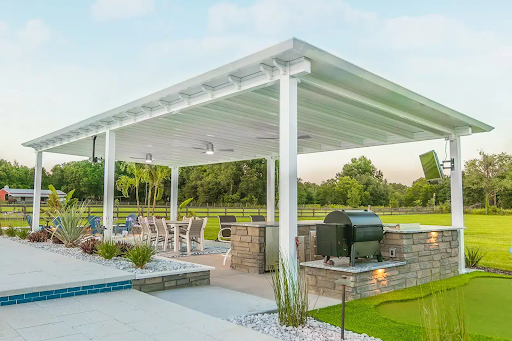
Patio covers are no longer considered simple shade solutions. Today, they are becoming well-planned extensions of the home. So they must be the trendy ones designed with purpose, combining advanced materials, architectural detailing, and climate-responsive features to support seamless indoor-outdoor living.
But what exactly is new in 2026? Which patio cover styles and materials are homeowners choosing to combine durability with design, boost home value, deliver long-term return on investment, and create Instagram-worthy outdoor spaces? Read on to discover the latest patio cover innovations in Austin that are shaping the future of outdoor living.
| Patio Cover Trends 2026 – Design & Material OverviewPatio cover trends in 2026 prioritize durability, sustainability, and adaptable outdoor functionality. Popular materials include powder-coated aluminum, engineered wood, polycarbonate panels, and mixed-material structures that combine strength with visual warmth. Design trends feature seamless indoor-outdoor flow, curved layouts, biophilic elements, and climate-responsive roof systems. Functional upgrades such as outdoor kitchens, integrated drainage, entertainment systems, and built-in utilities transform patios into versatile, year-round living spaces. |
Innovative Materials For Modern Patio Covers
Aluminum and Powder-Coated Metals
Aluminum continues to lead in 2026 because:
- It is very durable and resistant to rust, corrosion, and harsh weather conditions.
- It requires less maintenance compared to wood and steel.
- Powder-coated materials provide additional protection and the ability to choose colors such as matte black or charcoal.
- It is very lightweight, making installation easier and suitable for motorized or smart roofs.
- It has a sleek and modern appearance that matches today’s outdoor design trends.
- Aluminum materials are recyclable, making them more environmentally friendly.
Polycarbonate Roof Panels
One of the most popular options for a bright and airy patio cover is the polycarbonate panel. These panels provide a bright and clever combination of visibility and protection. They allow natural light to pass through while protecting the area from the rain and damaging UV rays. They are also much lighter and more durable than glass, making them a much easier option to install and use in the home.
Wood (Especially FSC-Certified or Treated)
Wood remains a timeless option for patio covers, especially when it is FSC-certified or specially treated for outdoor durability. In fact, the research from the USDA Forest Service supports that responsible forest management helps protect ecosystems and biodiversity, making FSC-certified timber a sustainable choice.
On the other hand, pressure-treated or engineered wood enhances resistance to moisture, insects, and warping. Cedar wood is highly prized for its natural resistance and aesthetic appeal, while in contemporary design, wood is combined with metal framing to achieve warmth and strength.
Mixed Materials (Wood + Metal + Stone)
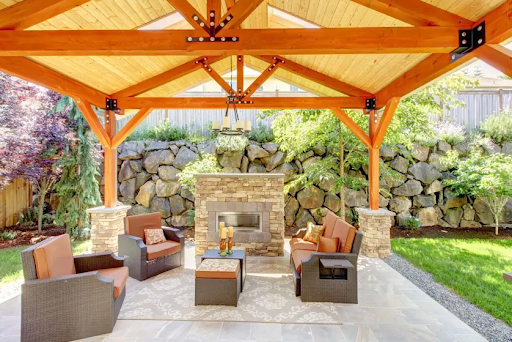
Patio covers in Austin often combine powder-coated metal frames for strength, cedar or engineered wood for warmth, and stone columns or bases for stability. Each material serves a purpose
- Wood adds natural texture,
- metal resists weather, and
- stone provides structural grounding.
This layered approach enhances durability while creating a more custom, high-end architectural look.
High-Performance Fabrics & Shade Textiles
High-Performance Fabrics & Shade Textiles are designed specifically for tensioned and retractable patio systems. These textiles are engineered to stretch evenly under load, maintain shape across wide spans, and create smooth, sculpted canopies. For example:
- PTFE tensile membranes are used in architectural shade structures for their long-span capability.
- HDPE knitted shade cloth features lock-stitch construction that prevents fraying when cut.
- PVC-coated polyester allows heat-welded panel fabrication for custom sizing,
- Soltis 86 micro-perforated fabric delivers precise openness factors for controlled light diffusion.
Design Trends of Patio Covers Shaping Outdoor Spaces
Indoor–Outdoor Space Integration
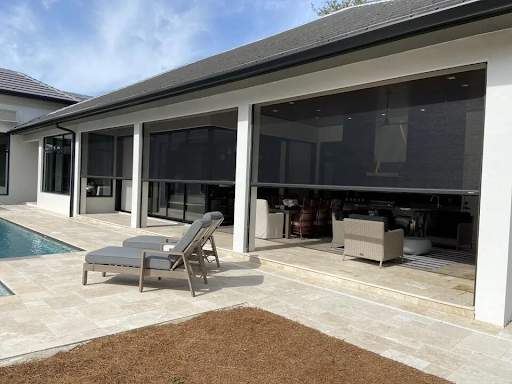
In modern outdoor design, the goal is to make your indoor and outdoor spaces feel like one continuous area. You can do this by adding wide sliding or folding glass doors, using the same flooring inside and outside, and keeping ceiling heights aligned. When everything flows naturally, light and air move freely between spaces. This makes your home feel bigger, brighter, and much more connected.
Green-Framed Outdoor Enclosures
Want something that can connect you with nature? Go for biophilic enclosures! At the place of solid walls, use:
- plants
- vertical gardens
- climbing vines, or
- natural screens to create soft, green boundaries.
The plants will become a part of the patio cover. This will help in the improvement of air quality, provision of natural shades, reduction of heat, and creation of a cool environment.
Curved Geometry & Organic Layouts
Curved geometry in patio covers requires specially fabricated structural components rather than standard straight beams. Arched rafters, bent steel frames, radius-cut aluminum profiles, and laminated timber beams are shaped to achieve smooth spans. Roofing panels are custom-cut to follow the curve, and support posts are positioned to maintain structural balance. It focuses on engineered curvature within the cover itself, not just surrounding décor, making the patio structure visually fluid while remaining structurally precise.
Advanced Climate-Responsive Roof & Shade Systems
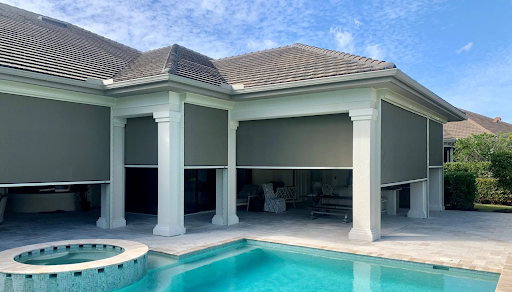
Modern patio covers in Austin are created to provide you with complete control over your outdoor area. The roof panels or louvers can be tilted, slid, or retracted to control sunlight, airflow, and rain protection. Some patio covers come with smart sensors that can change automatically depending on temperature or rain. This makes outdoor areas more functional, comfortable, and usable during different seasons.
Enhancing Outdoor Living With Functional Upgrades
1. Built-In Outdoor Kitchens
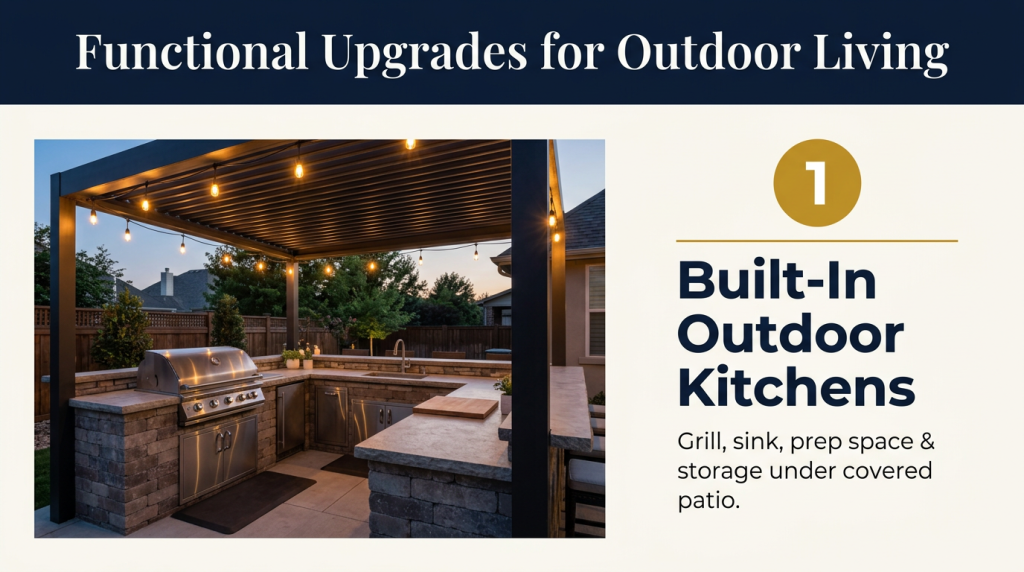
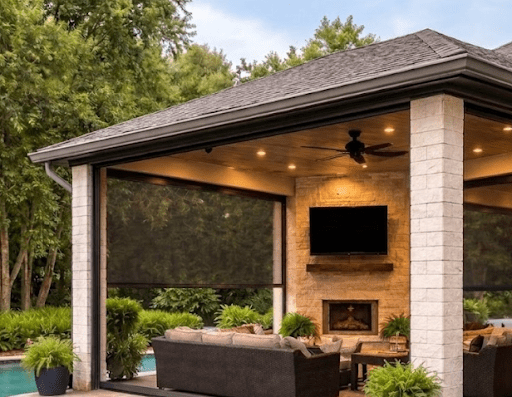
Transform your patio into a fully equipped culinary space with a built-in outdoor kitchen featuring a grill, sink, prep area, and storage, all under a stylish covered pergola.
2. Outdoor Entertainment Systems
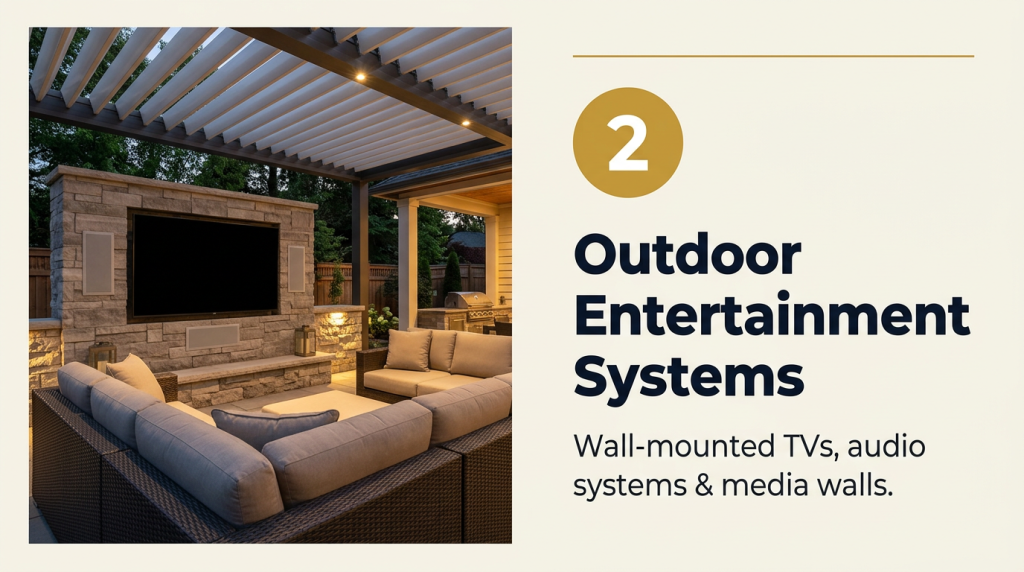
Bring the living room outside with weatherproof wall-mounted TVs, surround sound audio systems, and a sleek stone media wall built for open-air entertaining.
3. Fire Features
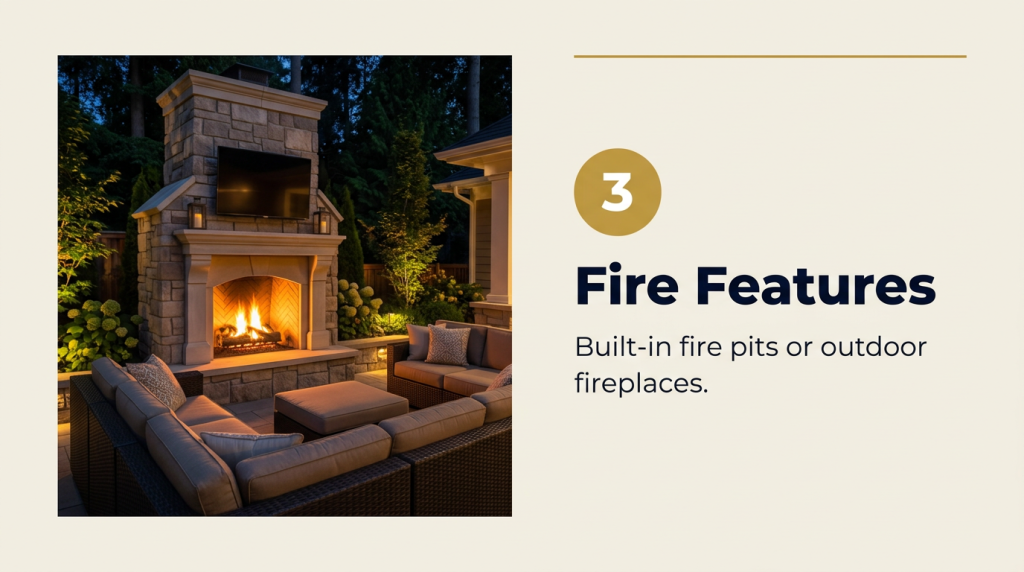
Extend your outdoor season year-round with a built-in stone fireplace or fire pit, adding warmth, ambiance, and a stunning focal point to your patio.
4. Integrated Drainage Systems
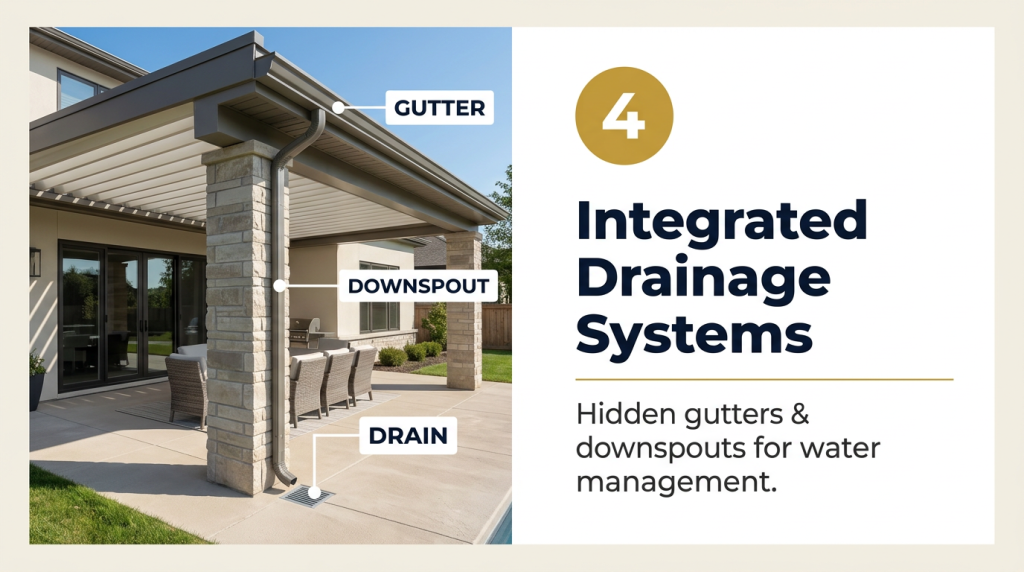
Keep your outdoor space clean and dry with hidden gutters, downspouts, and floor drains engineered seamlessly into your patio structure.
5. Privacy Panels or Decorative Slat Walls
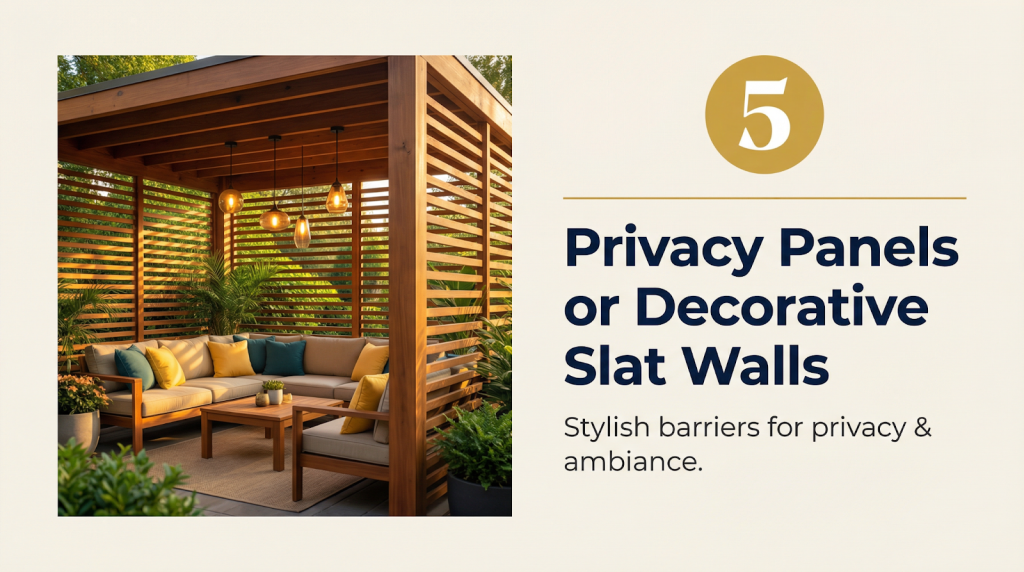
Define your outdoor retreat with stylish horizontal slat privacy panels that block unwanted views while adding texture, warmth, and designer appeal to your space.
6. Built-In Electrical Outlets & USB Ports
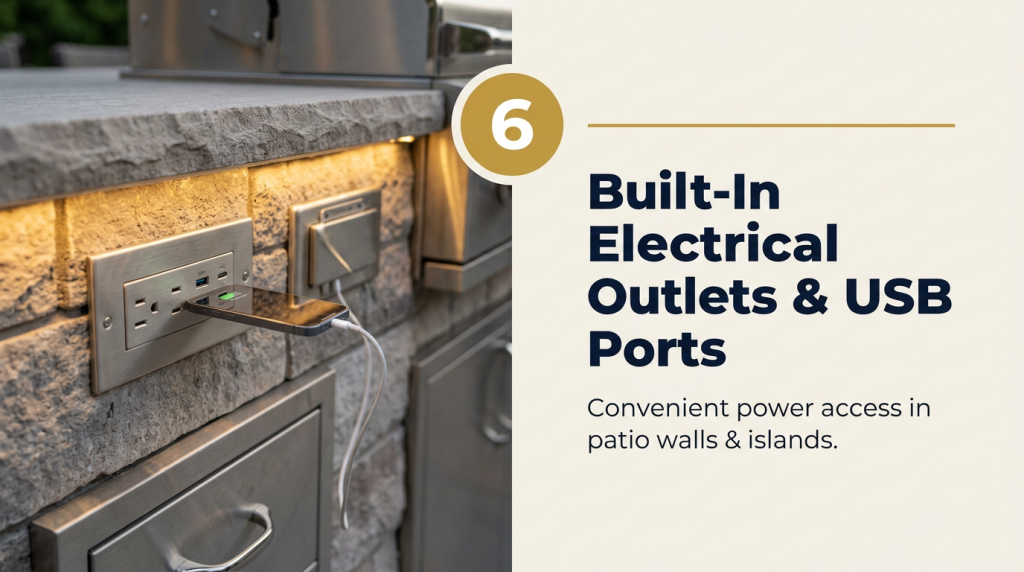
Power up your outdoor lifestyle with flush-mounted weatherproof electrical outlets and USB charging ports built directly into patio walls and kitchen islands.
Conclusion
Using this information, you can identify patterns in creating a patio cover that fits your design desires. If you’re looking for a reliable company to create a patio cover, check out Bluebonnet Patio Covers in Austin, TX. Bluebonnet has the experience to create custom patio covers, pergolas, insulated roof systems, and numerous other enhancements for comfort and durability.
FAQ’s
Will adding a patio cover add value to your property in 2026?
A good-looking patio cover in Austin can enhance the appearance of usable outdoor living space while improving outdoor usage and attracting buyers, which can be valuable to you when trying to sell in a competitive real estate market.
Are there zoning and/or HOA rules regarding today’s modern patio covers?
Yes. Most cities require a permit to construct any attached structure. Some HOAs have restrictions related to height, materials, colors, and placement, so be sure to check their rules before you begin construction.
Are patio covers in Austin being planned earlier in new home construction?
Builders increasingly include patio covers in Austin’s designs of new house plans so they can structurally tie, drain, and create a uniform appearance as one completes all aspects of the project from the very beginning.
Can Lighting And Fans Be Pre-Wired Inside Modern Systems?
Many newer patio covers come with concealed internal wiring channels designed specifically for integrated lighting and ceiling fan installations.
What Foundation Preparation Is Required Before Patio Cover Installation?
Some systems require concrete footings below frost depth, while others use surface-mounted anchor plates. Soil type and load calculations determine the approach.